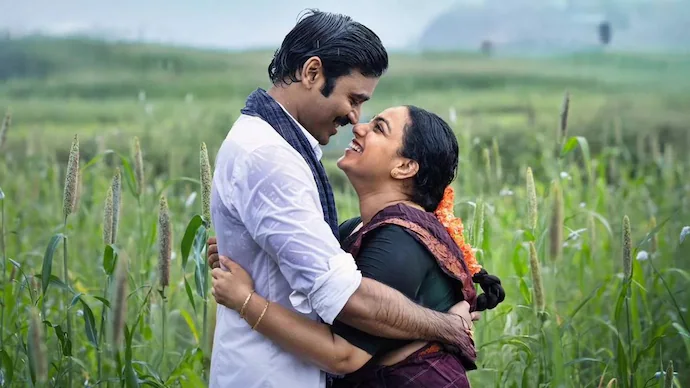
Parimala and Co Review: A Golden Cast Trapped Inside a Half-Cooked Caper
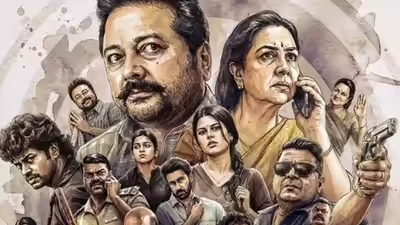
Some films are undone by a shortage of talent. Parimala and Co suffers from the opposite affliction: it has talent to spare, a premise brimming with mischief, and a director with a proven feel for domestic chaos, and it squanders nearly all of it. The result is one of the more frustrating Tamil releases of the year, not because it is incompetent, but because the splendid film hiding inside it is so easy to imagine. You spend two hours watching a terrific ensemble work hard to rescue a screenplay that runs out of ideas almost as soon as it has set them up.
The premise is irresistible on paper. Directed by Pandiraaj, the film is pitched as a black comedy thriller, the dark-humour cousin of the Drishyam school of family mysteries. At its centre is a gloriously dysfunctional middle-class household: a patriarch, his sharp-tongued wife Parimala, and their two daughters, whose ordinary squabbles are disrupted when a local rowdy named Varghese begins harassing the younger girl and brazenly announces his intention to marry into the family. When Varghese turns up dead, the family find themselves the prime suspects, and an eccentric investigating officer begins slowly tightening his circle around them. It is a setup that promises laughs, suspense, and the delicious tension of decent people with something to hide.
For a while, it delivers. The film’s opening stretch crackles with exactly the energy the marketing promised, largely on the strength of its cast. The reunion of Jayaram and Urvashi, that beloved comic pairing of the 1990s, is the film’s beating heart, and their chemistry remains effortless and warm. Jayaram, playing a Palakkad Malayali settled in Tamil Nadu, dusts off the comic register he has perfected over decades; it is familiar, yes, but it is still genuinely funny, and his trademark flourishes land with the ease of an old master. Urvashi, meanwhile, is a force of nature, and the combination of her timing and the film’s dialogue produces several of its biggest laughs. Their scenes together carry a nostalgic glow that the film, to its credit, knows how to exploit.
The supporting players are equally game. Mysskin, cast against type as the offbeat investigating officer, brings a wonderfully distracted quality to his cop, a man seemingly more interested in roadside snacks than in solving the case, and his deadpan eccentricity matches the film’s intended tone perfectly. Among the younger cast, Sanjana Krishnamoorthy makes a strong impression as the outspoken elder daughter, holding her own amid the veterans. George C. Williams’ cinematography is clean and unfussy, and the film’s domestic milieu is rendered with the lived-in warmth that has long been Pandiraaj’s signature.
And then, almost imperceptibly, the film begins to unravel. The trouble starts once the central premise has been established and the screenplay must actually develop it. Instead of deepening the comedy or sharpening the suspense, Parimala and Co grows scattered and restless, unsure of what it wants to be. The dark-comic promise of the opening gives way, disappointingly, to the well-worn machinery of a conventional revenge thriller, and the film’s distinctive flavour drains out of it. Payoffs arrive without the buildup that would make them satisfying, so the twists, when they come, feel ordinary rather than ingenious. Worse, the writing telegraphs itself: the audience quickly grasps that no character has been placed on screen by accident, and so the supposed revelations land with a shrug of anticipation rather than a gasp of surprise.
The padding is the most damaging symptom. The film lingers far too long on humour that has no bearing on the plot, and at one point introduces a new character and a song so abruptly that one can almost feel the writer’s block behind the decision. The editing compounds the problem, chopping otherwise straightforward scenes into needless fragments and forever nudging the eye to look here and then there for no real reason. The narrative keeps circling back to the same house and the same question until the whole enterprise begins to feel thin, and the patience it asks of the audience is not adequately repaid. Even Urvashi, so delightful in flashes, is ultimately let down by the writing, which overcooks her character to the point of caricature, mistaking volume for comedy.
What stings is how clearly one can see the better film this might have been. The premise had every ingredient required to become the dark-comedy answer to Paapanasam, a household of ordinary people drawn into something sinister, played for laughs as much as for tension. The director is a reliable hand with family drama, the comic pairing at the centre is the stuff of nostalgia, and the hook is strong. All the makings of something memorable are present, and yet the film seems to exhaust its imagination in the first act and spends the remainder retreating into formula. The gap between what Parimala and Co could have been and what it settles for being is the very thing that makes it so dissatisfying.
This is not to say the film is without pleasures. As a breezy, undemanding watch, buoyed by a likeable cast and a handful of genuinely funny exchanges, it passes the time agreeably enough, and viewers seeking nothing more than a warm weekend caper may leave reasonably content. But the broader consensus is hard to argue with: this is a non-inventive film that wastes a golden opportunity and a golden cast. The performances are the reason to watch, and they are very nearly reason enough; the writing is the reason the film falls short, and ultimately it is the writing that prevails.
Parimala and Co is, in the end, a film of one good idea and too few that follow it. Come for the Jayaram and Urvashi reunion, savour the comic flourishes while they last, and make peace with the fact that the mystery surrounding them never quite earns the company it keeps.
Nooru Saami Review: A Tender, Quietly Defiant Drama Carried by a Luminous Swasika

With Love Review: A Soft, Sincere Tamil Romance With Warmth and Memory
Parasakthi Review: A Fierce Subject Rendered Strangely Cold
Youth Review: A One-Man Debut That Proves Heart Can Outsell Star Power
Kara Review: Dhanush and Vignesh Raja Mount a Gritty Period Heist That Promises More Than It Delivers
Thalaivar Thambi Thalaimaiyil Review: Jiiva Anchors a Warm, Wickedly Observed Village Satire
Love Insurance Kompany Review: An Average, Overstuffed Romantic Sci-Fi That Has Ideas but Not Enough Spark
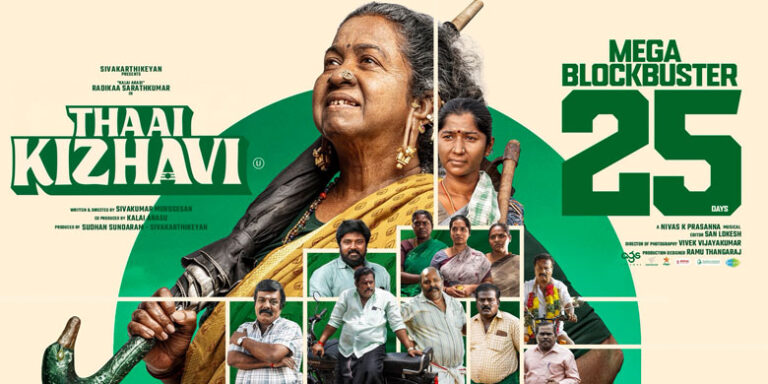
Thaai Kizhavi Review: A Rich, Rooted Rural Drama With Wit, Soul, and a Fiercely Unconventional Protagonist
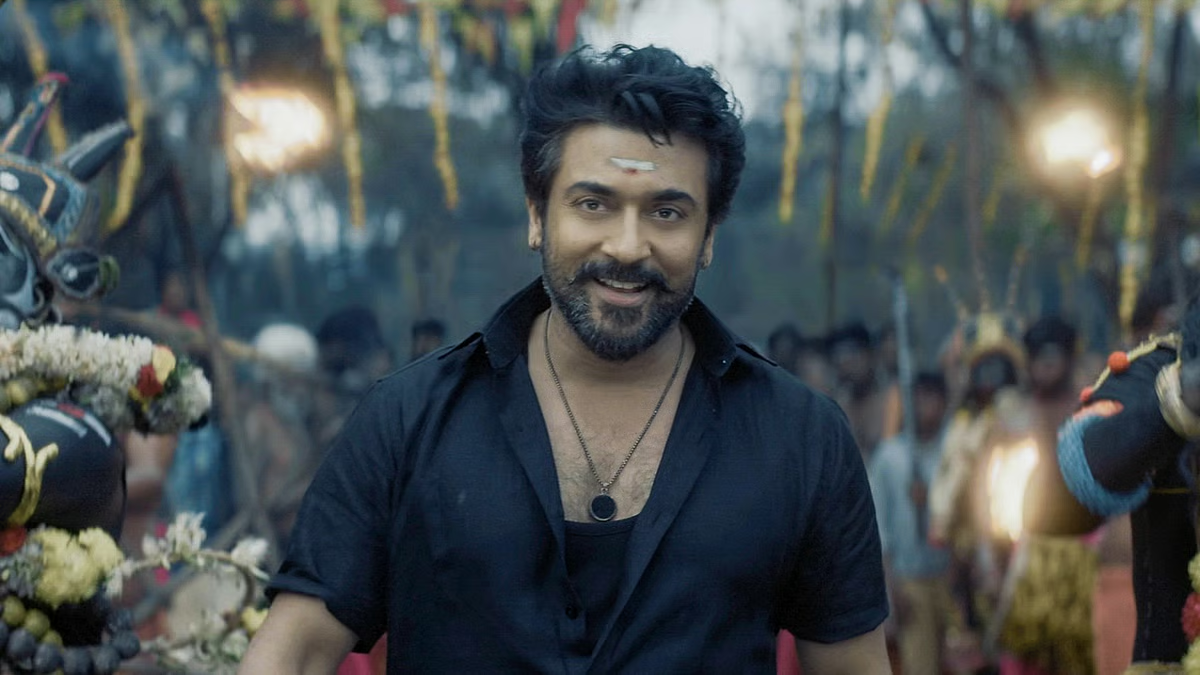
Karuppu Review: Suriya and RJ Balaji Conjure a Rousing, Big-Hearted Spectacle