Parasakthi Review: A Fierce Subject Rendered Strangely Cold
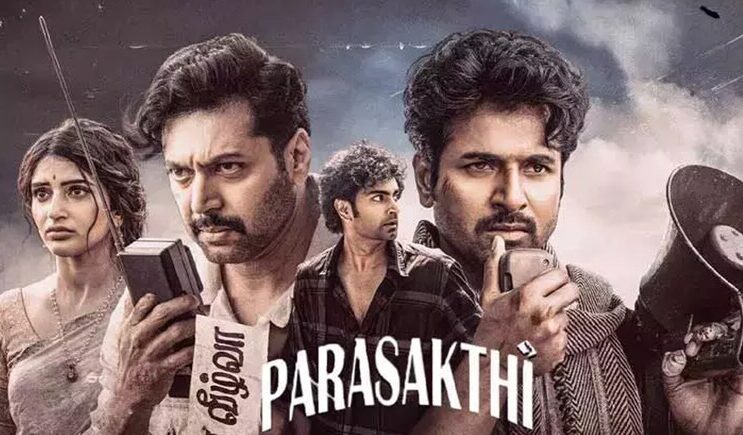
There are films that fail because they reach for too little, and there are films that fail because they reach for a great deal and fall short. Parasakthi belongs firmly to the second, and that is, in a way, the more painful category. Here is a film with an extraordinary subject, a gifted director, a capable cast and craftsmanship of a high order, and yet it never quite catches fire in the way its own material demands. One admires it. One rarely feels it. And in a film about a movement powered by raw, collective passion, that distance is its defining flaw.
The premise alone commands attention. Directed by Sudha Kongara and set largely in 1964, the film dramatises the anti-Hindi imposition agitations that convulsed Tamil Nadu, a genuinely pivotal chapter in the state’s modern history. It follows two brothers, the principled, idealistic Chezhiyan and his initially carefree younger sibling Chinna, whose paths through the movement form the film’s emotional and political spine. Threatened by a ruthless Intelligence Bureau officer, the brothers come to embody two registers of resistance, the dutiful and the incendiary. The canvas is rich, the stakes are existential, and the ambition is unmistakable.
Where the film works, it works handsomely. The period recreation is among its greatest assets; the production design conjures the Madras of the era with conviction, and Ravi K. Chandran’s cinematography lends the whole enterprise a textured, burnished visual sheen that is frequently beautiful to behold. G. V. Prakash Kumar’s score, fiery and propulsive, supplies much of the emotional charge the screenplay itself sometimes withholds, and the songs land with real force. There are, too, individual sequences of genuine power: a money-order episode, a grandmother’s tuition class, and a lucid, moving articulation of the difference between unity and uniformity. In these moments, the film locates exactly the human, ground-level texture that makes a political cause feel lived rather than lectured.
The performances are similarly solid. Sivakarthikeyan, as Chezhiyan, delivers a restrained and sincere turn, handling the emotional core with maturity even if the expected transformative crescendos at the interval and climax never quite reach the intensity the moment requires. Ravi Mohan, as the merciless officer, is arguably the film’s most magnetic presence, investing his antagonist with a controlled, unwavering menace that gives the conflict much of its weight. Sreeleela, as Ratnamala, is at her best in the film’s quieter, interpersonal passages, where she is feisty and genuinely alive; one senses Kongara is most in her element in precisely these tender, human spaces, and a beautifully constructed love-reveal late in the film confirms as much.
And yet, for all these virtues, Parasakthi remains curiously inert as an overall experience. The central problem is one of register. The film too often adopts the tone of a well-researched docudrama, informing the audience rather than moving them, so that we observe the fire on screen without ever feeling it burn within us. Things happen to the characters; what happens inside them, we rarely glimpse. For a story whose protagonists believed that what was at stake was not vocabulary but their very existence, this emotional distance is a significant failure of execution.
Compounding this is a screenplay that leans on the generic when it should be bold. The writing frequently settles for formula, the pacing is uneven, and the tonal shifts between cuts are inconsistent enough to disrupt the emotional continuity. Most damagingly, the film funnels a vast, systemic struggle into a conventional hero-versus-villain duel. By personalising the conflict so heavily, it dilutes the broader confrontation between a people and a policy, reducing a historic mass movement to a cinematic clash between two men. The villain, however well played, is pitched at a register of cinematic excess that sits awkwardly against the realism the subject deserves.
The romance, meanwhile, feels grafted on rather than integral, and it tests the patience precisely because it competes for space with material of far greater urgency. Worse, Ratnamala, introduced as a strong, ideologically driven figure, is gradually sidelined as the narrative proceeds, her potential left unrealised. One is left wishing the film had trusted its central idea enough to dispense with the obligatory commercial scaffolding altogether.
This is the heart of why Parasakthi could have been so much more. Every ingredient of a landmark film is present, and one can see the great ideas clearly; the trouble is that they remain ideas, gestured at rather than dramatised. There is a perceptible caution to the film, an evident anxiety to secure the broadest possible appeal, and that caution blunts the radical edge its subject cries out for. A more fearless film would have committed fully to the collective fury of the movement and trusted its audience to feel it; this one hedges, softening its fire into something safer and, ultimately, cooler. The result is a passionate argument delivered by a strangely distant film.
None of this makes Parasakthi a poor film. It is watchable, frequently handsome, and animated by a sincere belief in the importance of its story. For younger audiences in particular, it serves a real purpose, chronicling a chapter of history that deserves to be remembered and honouring the sacrifices of those who lived it. As a piece of public memory, it has clear value, and the makers deserve credit simply for committing to so unfashionable and important a subject on this scale.
But a film about fire ought to make us feel the heat, and this one mostly shows it to us from behind glass. Parasakthi is a film one respects more than one is stirred by, an honourable, well-mounted account of a momentous struggle that never fully becomes the urgent, blazing cinema it so clearly wanted to be. The potential for greatness is visible in nearly every frame. That it remains only potential is the film’s quiet tragedy.
Nooru Saami Review: A Tender, Quietly Defiant Drama Carried by a Luminous Swasika
Parimala and Co Review: A Golden Cast Trapped Inside a Half-Cooked Caper

With Love Review: A Soft, Sincere Tamil Romance With Warmth and Memory
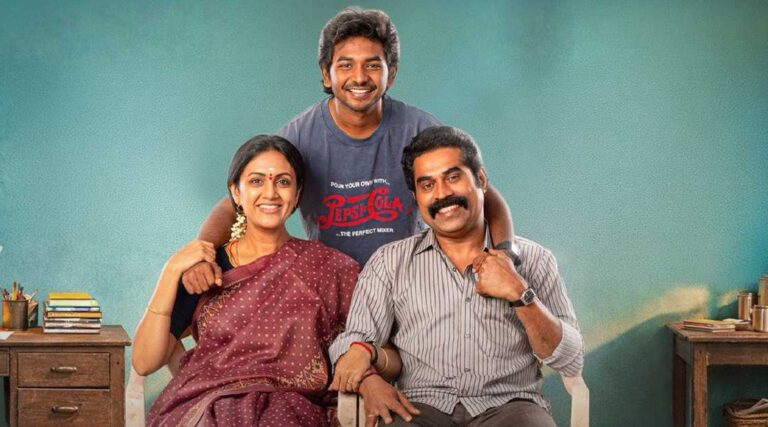
Youth Review: A One-Man Debut That Proves Heart Can Outsell Star Power
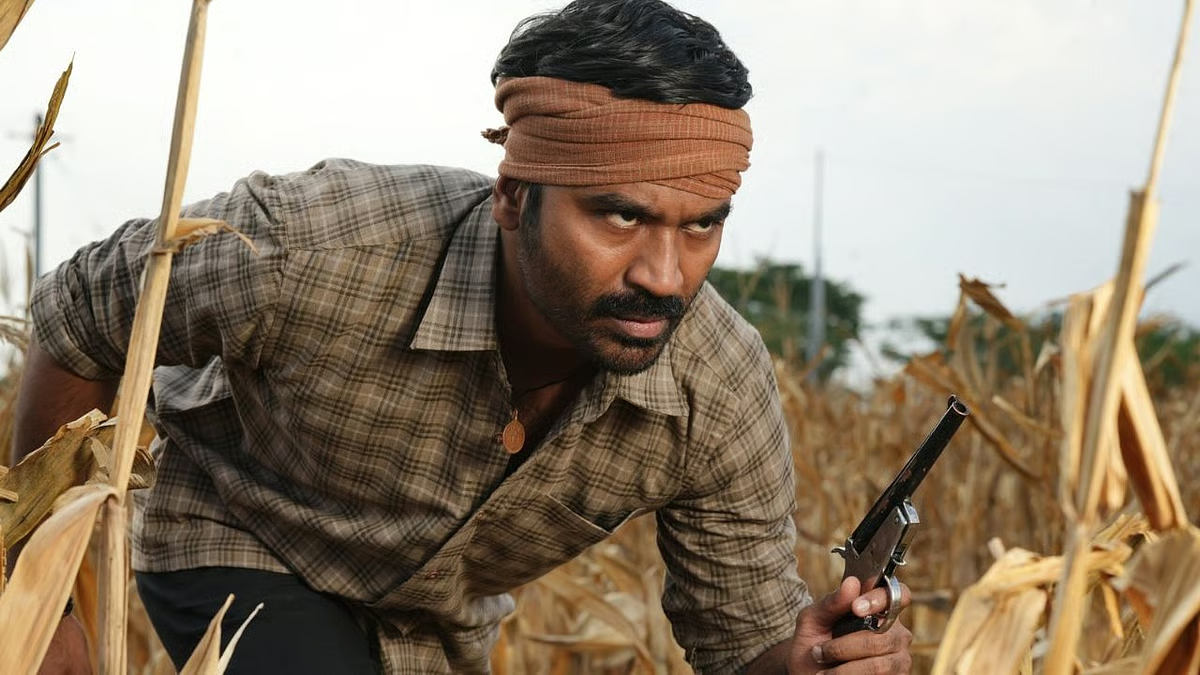
Kara Review: Dhanush and Vignesh Raja Mount a Gritty Period Heist That Promises More Than It Delivers
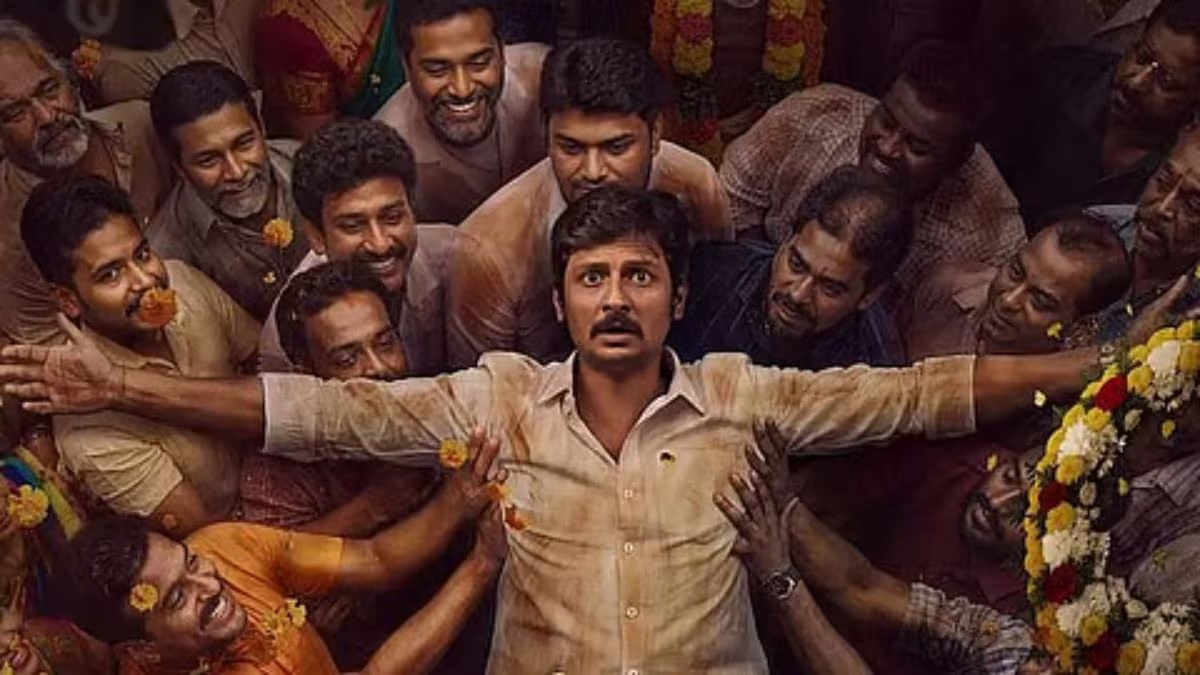
Thalaivar Thambi Thalaimaiyil Review: Jiiva Anchors a Warm, Wickedly Observed Village Satire
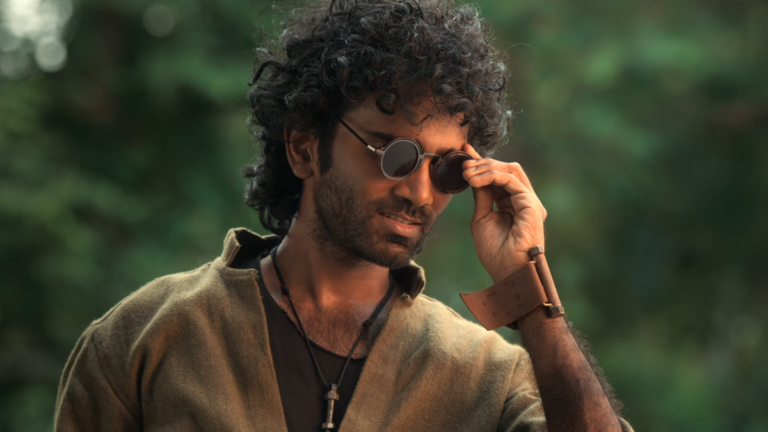
Love Insurance Kompany Review: An Average, Overstuffed Romantic Sci-Fi That Has Ideas but Not Enough Spark
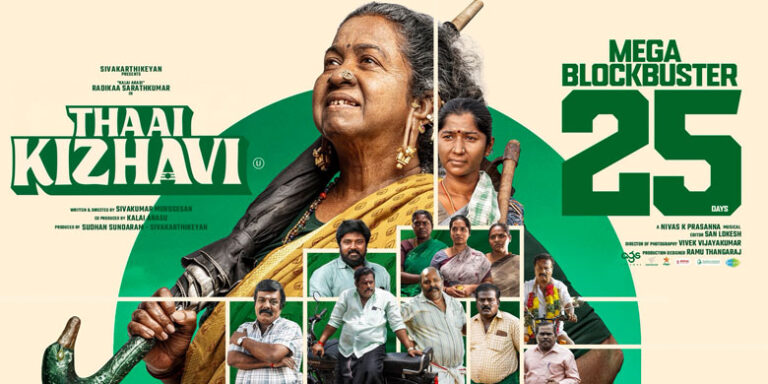
Thaai Kizhavi Review: A Rich, Rooted Rural Drama With Wit, Soul, and a Fiercely Unconventional Protagonist
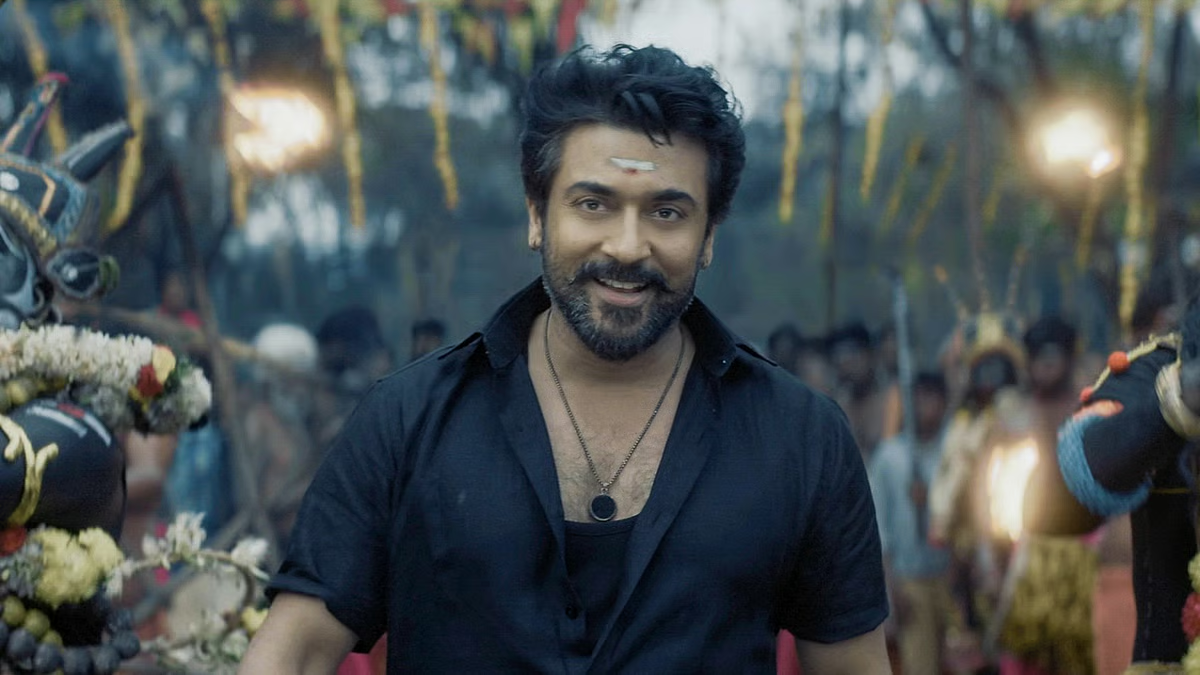
Karuppu Review: Suriya and RJ Balaji Conjure a Rousing, Big-Hearted Spectacle