Kara Review: Dhanush and Vignesh Raja Mount a Gritty Period Heist That Promises More Than It Delivers
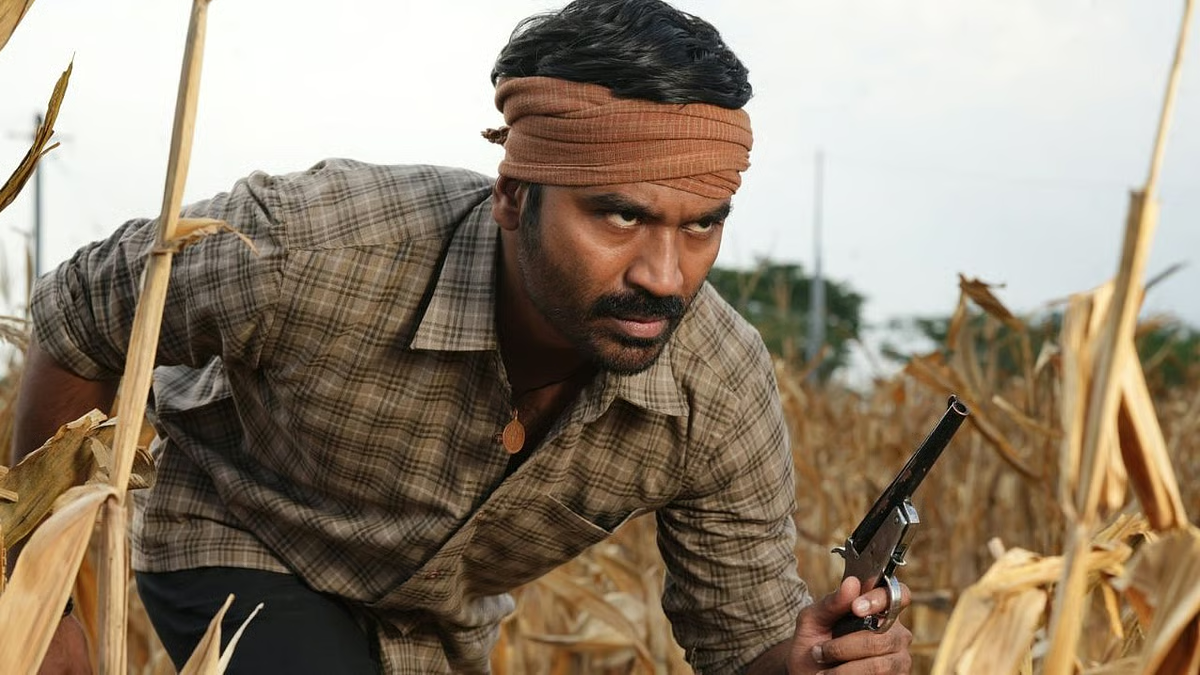
There is a great deal to admire in Kara, and a little to lament, and the two are so closely entwined that one cannot quite discuss the film’s pleasures without acknowledging its frustrations. Marking Dhanush’s fifty-fourth outing as a leading man and the second feature from Vignesh Raja, who announced himself so confidently with Por Thozhil, this is a period heist thriller of evident ambition and considerable craft. That it does not entirely fulfil its promise is disappointing precisely because the promise is so palpable.
The film is set in the early 1990s, against the backdrop of the Gulf War and the fuel crisis it triggered, and that texture is one of its quiet triumphs. Vignesh and his team have recreated the Tamil Nadu of that era with loving specificity, from the dusty road junctions to the period detail of costume and prop, and the world feels lived-in rather than merely decorated. At the centre of it is Karasaami, known as Kara, a thief who has resolved to give up his old life and live quietly with his wife. That resolve is tested almost immediately, for when he returns to his homeland in need of money, he discovers that the ancestral land he believed his father held has already been pledged to the bank. From this seizure springs his reluctant return to crime, and the film’s larger game.
Dhanush is, as one has come to expect, magnetic. He plays Kara not as a hero but as a desperate, cornered man, and the actor locates the angst and vulnerability beneath the character’s hardened exterior with characteristic precision. There is no vanity in the performance; Kara is established from the opening sequence as a fundamentally unheroic figure, and Dhanush leans into that ambiguity rather than softening it. It is a turn of real interiority, and it carries the film even through its weaker stretches.
He is surrounded by a sturdy ensemble. K. S. Ravikumar is genuinely affecting as Kara’s father, the emotional anchor around which much of the first half revolves, and Karunas, reunited with Dhanush after a long absence, makes the most of an extensive and well-judged role. Mamitha Baiju, whose casting attracted some controversy, is given relatively little screen time, yet she seizes the opportunity to demonstrate that she can inhabit a rural Tamil character with conviction. Suraj Venjaramoodu brings an interesting menace to his antagonist, compensating for the occasional slip of dialect through expressive body language and voice, while Jayaram is handed a role that begins intriguingly before fading into something more generic.
The film’s strongest suit is its visual storytelling. Vignesh, working with cinematographer Theni Eswar, demonstrates real command of mood and image in the early passages. Shadows thrown by lightning are used to convey the scale of a moment; an opening rain sequence externalises the hero’s emotional turmoil; even the alignment of a tractor in a late conversation carries deliberate meaning. The staging of certain tense set pieces, in particular a confrontation that draws on the gravitas of a veteran supporting actor and a sequence in which the police close in on the robbers, possesses a genuinely engaging rhythm. G. V. Prakash Kumar’s score is serviceable and atmospheric, and notably, the action is kept lean, never allowed to swamp the drama.
Where Kara falters is in its screenplay, and specifically in its inability to balance its two competing impulses. Almost the entire first half is devoted to establishing the bond between Kara, his father and their land, and while the payoff for this groundwork becomes clear once the heist machinery engages, the melodrama of these early stretches does not always land as intended. The film is at its most thrilling when it moves into the complicated game within the system, when Kara’s personal revenge gives way to a larger and less predictable design. For a time, one senses the story straining productively against its own conventions. Yet this welcome shift does not last; the narrative rushes towards a large-scale justice resolution, reaching for closure before it has fully earned it.
There is, too, a curious unevenness of tone. Having trusted the audience with subtle, image-led storytelling in its opening movement, the film later adopts an on-the-nose register in several scenes, spelling out what it had previously been content to imply. That shift feels like a momentary loss of nerve, a mistrust of the very viewers the early passages had so carefully cultivated. One also detects, beneath the heist apparatus, the familiar Tamil trope of the agrarian hero as saviour of the soil, and while Vignesh’s decision to approach it through the prism of a heist is genuinely fresh, the sentimental weighting occasionally pulls the film back towards the conventional.
These reservations matter, but they should not obscure how much Kara gets right. This is a handsomely mounted, intelligently performed and frequently gripping film, rooted in a specific time and place and anchored by a leading man at the height of his powers. Its ambitions are serious, its craft is real, and even its missteps are the missteps of a film reaching for something more than the ordinary. The mixed critical reception and its modest worldwide gross of around fifty crore tell only part of the story; on its own terms, this is a thriller of texture and conviction that simply needed a tighter, more confident final act.
For admirers of grounded, character-driven Tamil cinema, and of Dhanush in particular, Kara is well worth the time. It is a film that promises more than it ultimately delivers, but what it does deliver is considerable, and the promise itself is a pleasure to behold.

Nooru Saami Review: A Tender, Quietly Defiant Drama Carried by a Luminous Swasika
Parimala and Co Review: A Golden Cast Trapped Inside a Half-Cooked Caper

With Love Review: A Soft, Sincere Tamil Romance With Warmth and Memory
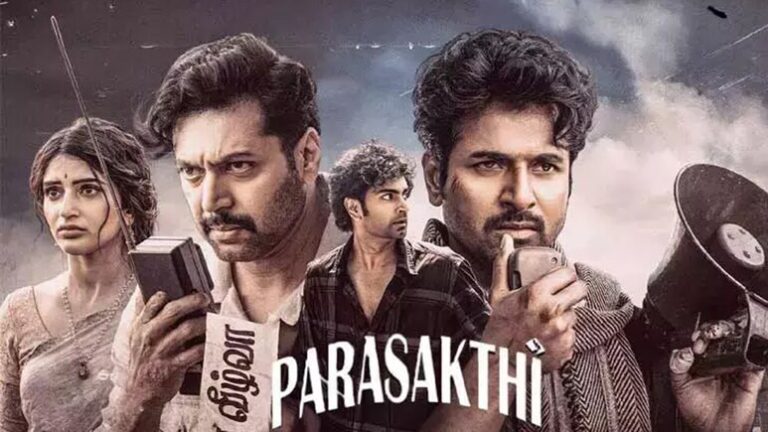
Parasakthi Review: A Fierce Subject Rendered Strangely Cold

Youth Review: A One-Man Debut That Proves Heart Can Outsell Star Power
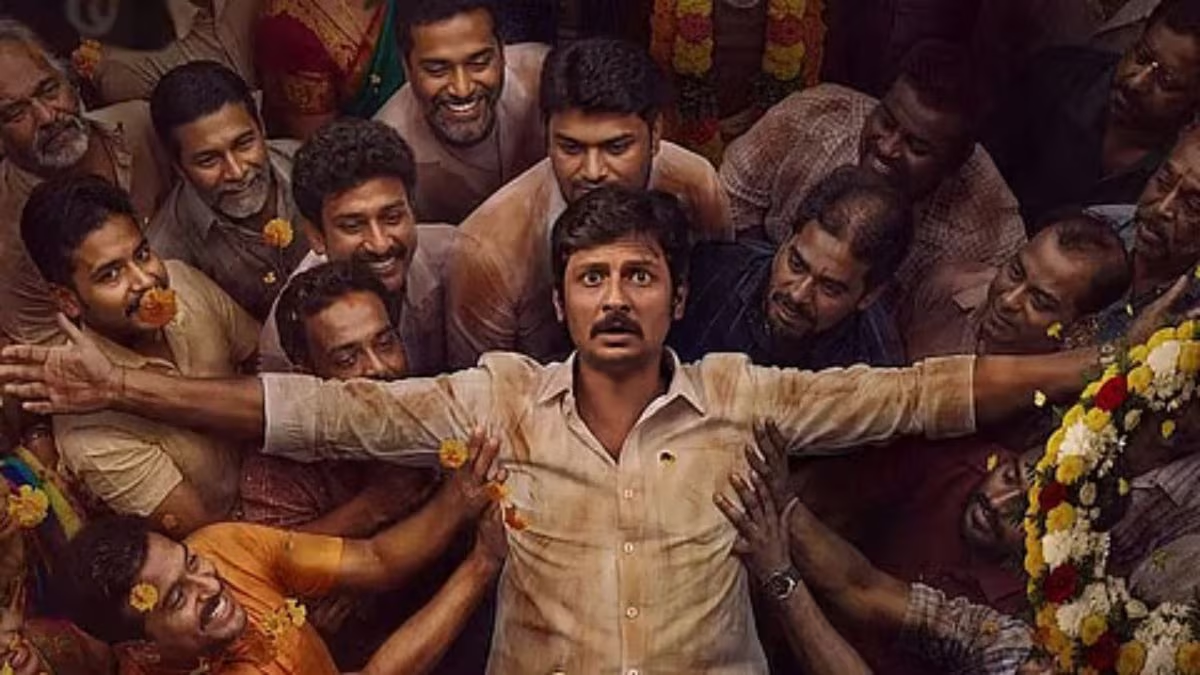
Thalaivar Thambi Thalaimaiyil Review: Jiiva Anchors a Warm, Wickedly Observed Village Satire

Love Insurance Kompany Review: An Average, Overstuffed Romantic Sci-Fi That Has Ideas but Not Enough Spark

Thaai Kizhavi Review: A Rich, Rooted Rural Drama With Wit, Soul, and a Fiercely Unconventional Protagonist

Karuppu Review: Suriya and RJ Balaji Conjure a Rousing, Big-Hearted Spectacle