Karuppu Review: Suriya and RJ Balaji Conjure a Rousing, Big-Hearted Spectacle
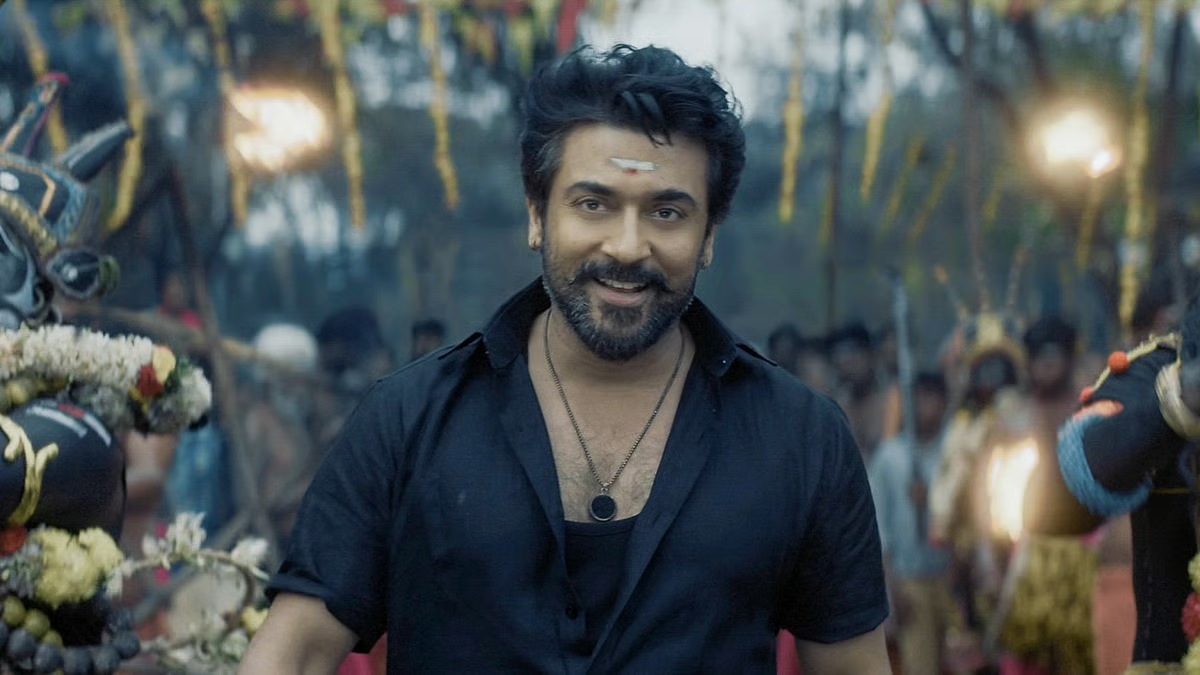
There is a particular kind of Tamil film that arrives not merely to entertain but to thunder, to stir something communal in a packed auditorium, and Karuppu belongs proudly to that lineage. Marking Suriya’s forty-fifth outing as a leading man, and directed with evident conviction by RJ Balaji, the film fuses myth, courtroom drama and unabashed mass appeal into a package that, for all its audacity, lands with surprising emotional force.
The premise alone signals its ambition. Suriya plays Saravanan, a lawyer who is, in truth, the human avatar of the guardian deity Vettai Karuppu, walking into a compromised court system to wage war on corruption. It is a conceit that should not work on paper, and yet the film’s great achievement is the conviction with which it commits to the idea. Rather than apologising for its mythological flourishes, Karuppu embraces them, asking the audience to accept that justice, when human institutions fail, might require something larger than human intervention.
At the centre of it all is Suriya, who has rarely looked more at home. He moves between the measured restraint of the courtroom and the elemental fury of the deity with a control that anchors the entire enterprise. There is a glint of mischief in his lawyer, and a genuine menace in his divine form, and the actor never lets the two blur into caricature. It is a performance of real range, and it reminds you why he remains among the most magnetic screen presences in the industry. The much-discussed transformation sequences, far from feeling gratuitous, carry a primal charge that had audiences roaring.
Balaji, who also appears on screen, surrounds his star with a well-judged ensemble. Trisha Krishnan brings warmth and gravity to her role, and the supporting players, including the wonderful Malayalam actor Indrans, lend the world a lived-in texture. The film’s emotional spine is supplied by a quietly devastating subplot: a father and daughter from Kerala, Mattancherry Sukumaran and Binu, who travel to Chennai carrying sixty sovereigns of gold meant to fund a life-saving liver transplant, only to have their hope stolen from them by thieves. It is this small, human tragedy, rather than the grand cosmic stakes, that gives the film its moral urgency, and Balaji is wise enough to keep returning to it.
What impresses most is the writing’s command of the courtroom. The procedural scenes crackle with the rhythm of accusation and rebuttal, and Balaji and his co-writers find genuine tension in the clash between legal process and entrenched venality. When the film sticks to these earthbound confrontations, it is gripping; and when it ascends into divine spectacle, it does so with a showman’s flair that this reviewer found exhilarating rather than excessive. Some have argued that the supernatural turn overwhelms the human drama, but the counter-case is simpler: the spectacle is the point. This is a film about faith as a corrective to despair, and its mythic register is not a distraction from its theme but its fullest expression.
Technically, the film is handsomely mounted. Sai Abhyankkar’s score is a muscular, propulsive thing, swelling at exactly the right moments and lending the deity’s interventions an appropriately thunderous grandeur. G. K. Vishnu’s cinematography is rich and confident, framing both the intimate courtroom exchanges and the larger-than-life set pieces with equal assurance, while R. Kalaivanan’s editing keeps a potentially unwieldy narrative moving with purpose. The production values, courtesy of Dream Warrior Pictures, are evident in every frame, and the fan-pleasing cameos are deployed with a knowing wink rather than cynicism.
If one must quibble, the film occasionally strains under the weight of its own mythology, and a tighter second half might have sharpened its impact further. But these are minor reservations against a work of such evident sincerity and scale. Karuppu knows exactly what it wants to be, and it pursues that vision with a wholehearted commitment that is, frankly, infectious.
The verdict of the public has been emphatic, and deservedly so. The film has gone on to become the highest-grossing Tamil release of the year and the biggest hit of Suriya’s storied career, crossing ₹300 crore worldwide. Such numbers are not, of course, a measure of artistry, but in this case they reflect something real: a film that connected with audiences because it dared to feel deeply and dream big.
Karuppu is mass cinema at its most rousing, a film that marries social conscience with mythic grandeur and trusts its audience to embrace both. Suriya delivers one of his most commanding turns, Balaji directs with heart and bravado, and the result is a celebration of everything that makes Tamil cinema soar. It is, quite simply, a triumph.

Nooru Saami Review: A Tender, Quietly Defiant Drama Carried by a Luminous Swasika

Parimala and Co Review: A Golden Cast Trapped Inside a Half-Cooked Caper

With Love Review: A Soft, Sincere Tamil Romance With Warmth and Memory
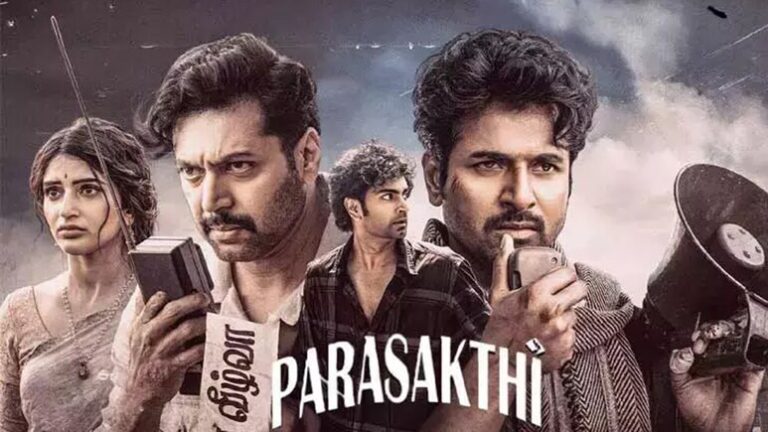
Parasakthi Review: A Fierce Subject Rendered Strangely Cold

Youth Review: A One-Man Debut That Proves Heart Can Outsell Star Power
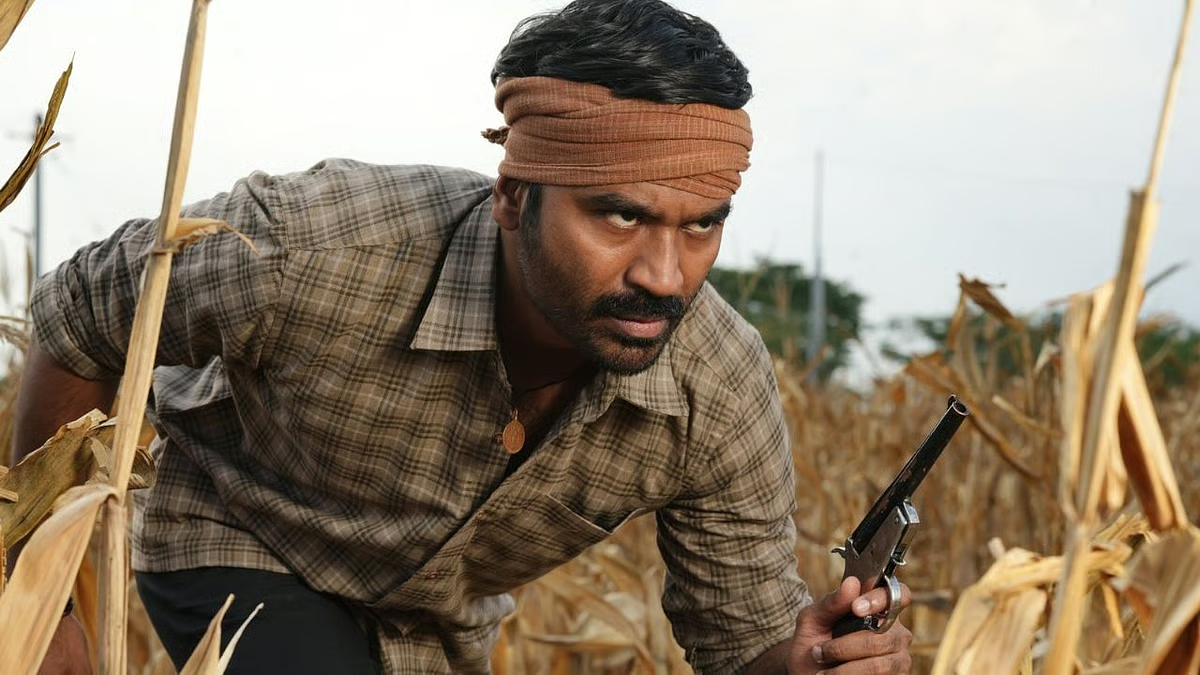
Kara Review: Dhanush and Vignesh Raja Mount a Gritty Period Heist That Promises More Than It Delivers
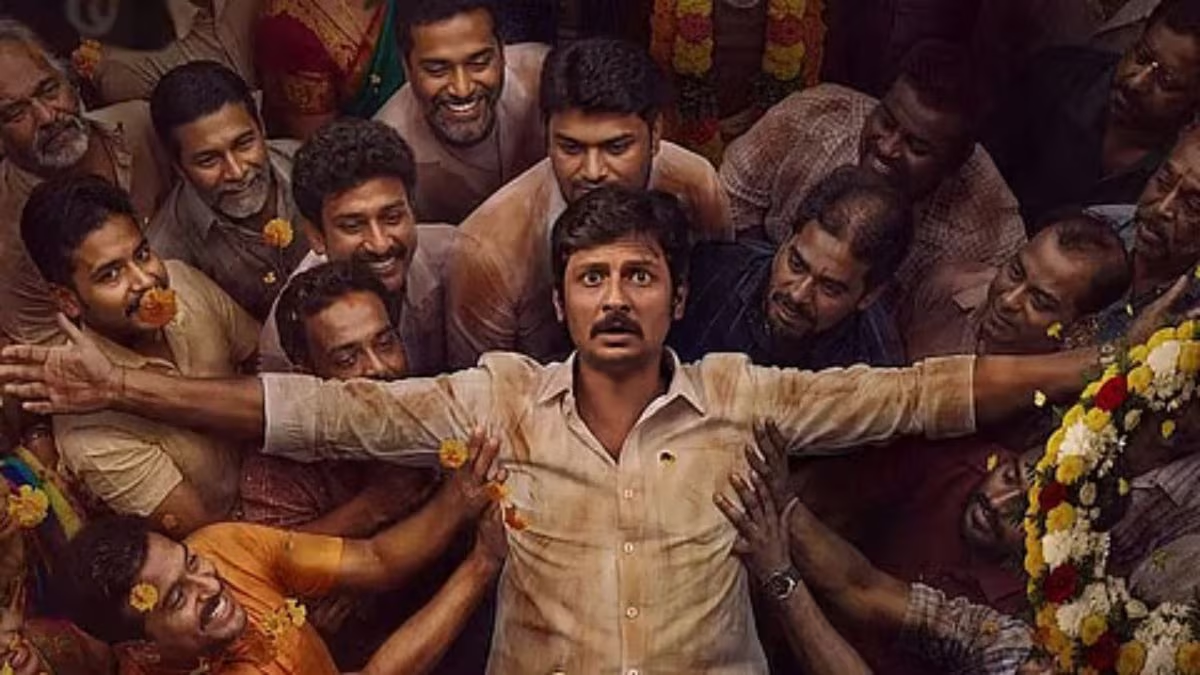
Thalaivar Thambi Thalaimaiyil Review: Jiiva Anchors a Warm, Wickedly Observed Village Satire
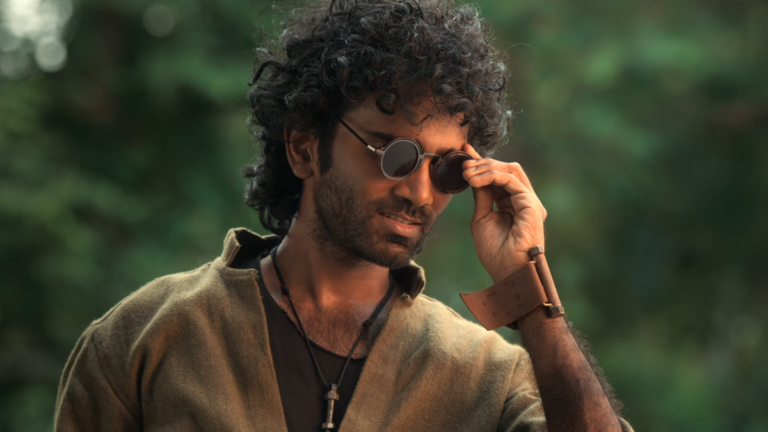
Love Insurance Kompany Review: An Average, Overstuffed Romantic Sci-Fi That Has Ideas but Not Enough Spark

Thaai Kizhavi Review: A Rich, Rooted Rural Drama With Wit, Soul, and a Fiercely Unconventional Protagonist