Main Vaapas Aaunga Review: A Poetic, Emotional Drama About Love, Memory, and Partition
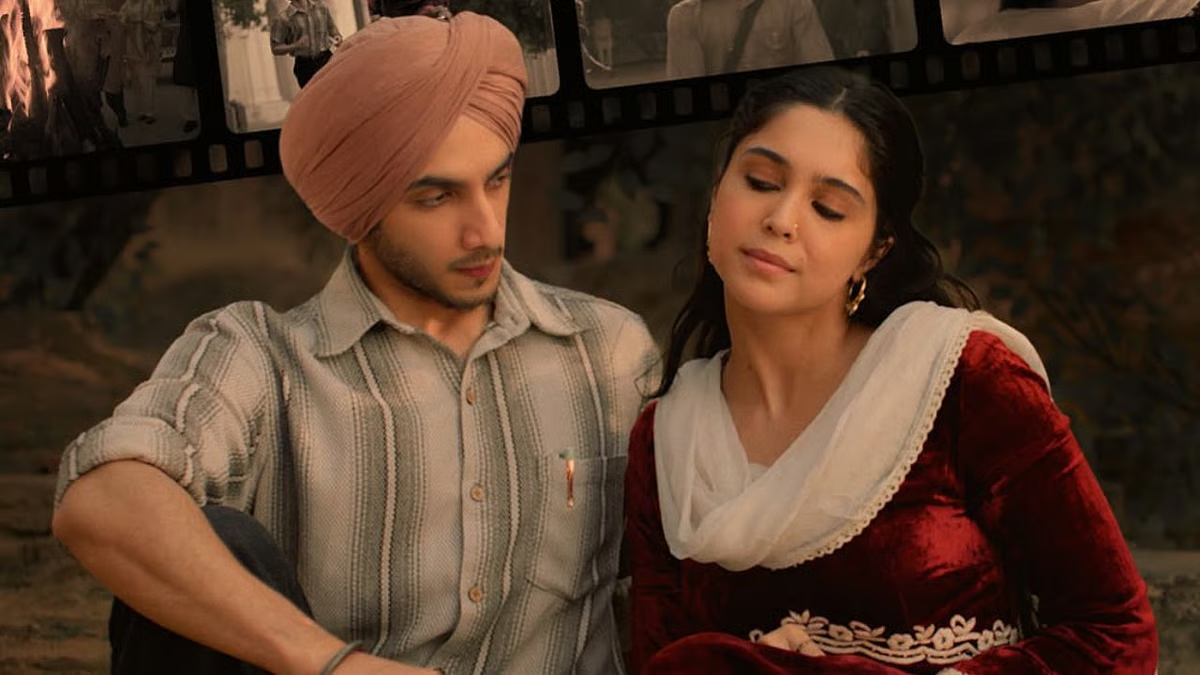
Main Vaapas Aaunga is a thoughtful, emotionally layered romantic drama that works best when it leans into memory, longing, and the ache of separation. It is not a fast-moving film, and it does not try to be one. Instead, it asks for patience and rewards that patience with a moving final stretch, even if the middle portions sometimes feel a little too stretched for their own good.
The film’s biggest strength is its emotional ambition. At its heart, it tells a love story shaped by the Partition era, but it also widens that love story into something more reflective and generational. The present-day thread, involving a grandson trying to understand his grandfather’s fading memories, gives the film a second emotional layer. That structure allows the film to explore not only lost love, but also inherited grief, family memory, and the way history can remain alive inside a household long after the original events have passed.
This is where the film feels at once intimate and expansive. On one level, it is about a single unfinished promise between two lovers. On another, it is about displacement, borders, identity, and the long emotional shadow of Partition. These topics are handled with a clear sense of seriousness, even if the screenplay occasionally becomes over-reliant on mood and repetition. The film is strongest when it connects private sorrow to historical rupture without over-explaining either.
The performances help the film carry its emotional weight. The older track is anchored by Naseeruddin Shah, whose presence gives the story gravitas and tenderness. Diljit Dosanjh brings a grounded, contemporary energy to the present-day portions, while Vedang Raina and Sharvari supply the youthful romance with enough sincerity to make the pre-Partition sections feel alive. The film benefits from actors who understand the tone: restrained, lyrical, and emotionally open.
Cinematography is one of the film’s most appealing features. Sylvester Fonseca’s visual approach gives the romantic portions a dreamlike softness, often using warm, sunlit frames that make the love story feel nostalgic even before it is lost. In the Partition-era material, the imagery becomes more fragile and melancholic, which suits the story’s emotional arc. The camera does not merely record events; it shapes memory. That is especially important in a film built around recollection, longing, and the instability of the past.
The movie’s duration is substantial, and that is both a strength and a limitation. At around 2 hours and 47 minutes, it has the room to explore multiple timelines and emotional registers, but the length also means the film occasionally lingers a little too long in its transitions. Some stretches feel deliberately unhurried, which helps the mood, but a few passages could have been trimmed without damaging the emotional impact. Still, the runtime is not wasted overall, because the film is clearly aiming for a sweeping, reflective rhythm rather than a compact melodrama.
A.R. Rahman’s music adds a great deal to the experience. His score and songs give the film a poetic pulse that aligns beautifully with its themes of memory and loss. The music does not overpower the story; instead, it blends into it, supporting the emotional tone with restraint and elegance. In a film like this, that kind of musical sensitivity matters a lot, because the material depends on atmosphere as much as plot. Rahman helps make the film feel more tender, more humane, and more emotionally resonant.
What the film does particularly well is connect personal romance to historical trauma without treating either one as secondary. The love story is not just a decorative thread inside a “serious” historical drama. It is the core emotional engine that makes the larger history matter. The Partition backdrop is used to show what is lost when people are torn from land, memory, and one another. That gives the film a weight that stays with the viewer even after the story shifts to the present.
There are, however, moments where the film’s emotional sincerity outpaces its dramatic sharpness. It sometimes leans a little heavily into its own poetry, and not every scene lands with equal force. The pacing can feel indulgent in places, and the political or historical texture is not always as nuanced as the film seems to want it to be. But those flaws do not erase the film’s achievements. They simply keep it from becoming truly great rather than merely very good.
Even with those caveats, Main Vaapas Aaunga remains a rewarding watch for viewers who appreciate films that take their time and aim for emotional depth. It is a reflective, sorrowful, and gently hopeful film about love that outlives borders, memory that outlives the body, and stories that continue to matter across generations. Its cinematography is graceful, its music is haunting, its themes are weighty, and its performances are sincere. That combination gives the film a lasting emotional pull.
In the end, Main Vaapas Aaunga is a balanced and affecting drama that may not be flawless, but it is heartfelt, visually expressive, and musically rich. Its greatest strength lies in how it makes the past feel present, and how it turns a personal promise into a larger meditation on belonging and loss. It asks for patience, and it earns it with emotion.

Welcome to the Jungle Review: A Film So Contemptuous of Its Audience It Forgot to Be a Film
Hai Jawani Toh Ishq Hona Hai Review: A Loud, Dated Comedy That Runs Out of Steam

Cocktail 2 Review: A Stylish, Familiar Romance That Plays It Safe

Dhurandhar: The Revenge Review – A Grand, Entertaining Sequel That Delivers on Its Promise