Dhurandhar: An Objective Review
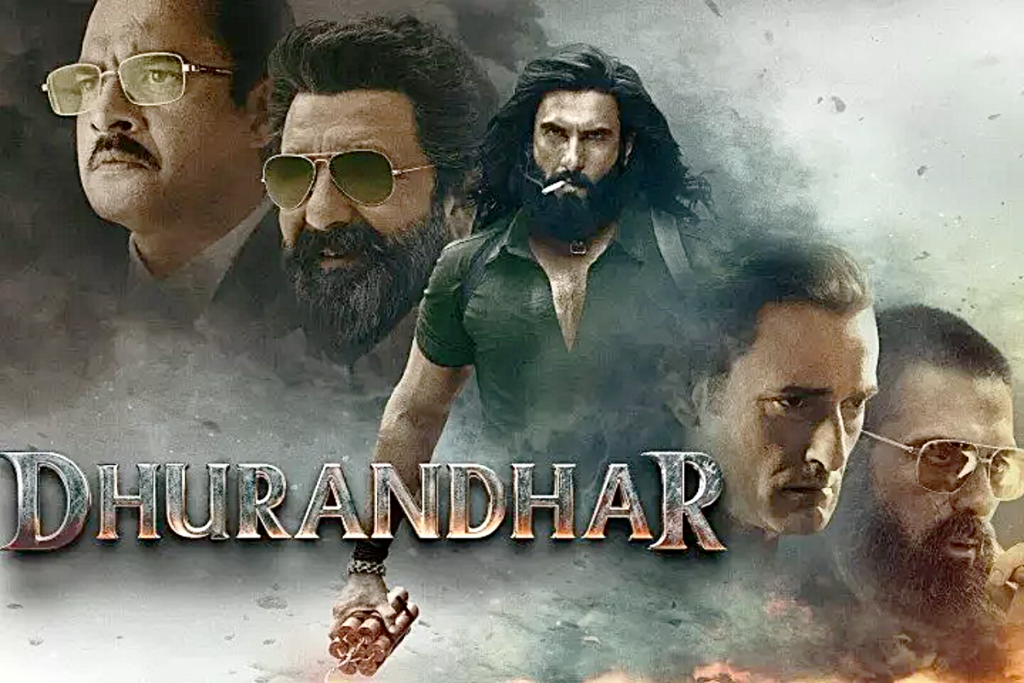
Dhurandhar 1, directed by Aditya Dhar and headlined by Ranveer Singh, is one of the most ambitious Indian films in recent years. Blending elements of gangster drama, espionage thriller, political intrigue, and historical inspiration, the film attempts to create a sprawling narrative that explores the underworld of Karachi’s Lyari district while laying the foundation for a much larger geopolitical story. Running for well over three hours, the film demands patience from its audience but rewards them with an immersive and often gripping cinematic experience.
At its core, Dhurandhar 1 is less a conventional spy thriller and more a character-driven crime saga. Rather than rushing into intelligence operations and large-scale action, the film spends significant time building its world and introducing the complex relationships that govern it. This deliberate approach becomes both one of the film’s greatest strengths and one of its most notable weaknesses.
One of the most impressive aspects of Dhurandhar 1 is its world-building. The film recreates the atmosphere of Lyari with remarkable attention to detail, making the setting feel authentic and lived-in. The streets, gang rivalries, political power structures, and social dynamics create an environment that feels tangible rather than merely serving as a backdrop for action sequences. The audience is given enough time to understand how various factions operate, which adds weight to the conflicts that emerge later in the story. Critics and audiences alike have praised the film’s ability to make its setting feel like a character in itself.
The performances are another major strength. Ranveer Singh delivers one of the most restrained performances of his career as Hamza Ali Mazari. Rather than relying solely on charisma or larger-than-life heroics, he allows the character’s intelligence, ambition, and emotional conflicts to emerge gradually. Akshaye Khanna, portraying Rehman Dakait, is particularly impressive. His character serves as the emotional center of much of the film, and Khanna’s performance brings both menace and vulnerability to the role. Supporting actors including Sanjay Dutt, R. Madhavan, and others contribute significantly to the film’s layered narrative, ensuring that even secondary characters leave a lasting impression.
Another area where Dhurandhar 1 excels is its storytelling structure. The film adopts a chapter-based narrative and gradually reveals the interconnected motivations of its characters. Instead of presenting clear heroes and villains, it operates in shades of grey. Criminals, politicians, intelligence operatives, and law enforcement officials all pursue their own interests, creating a morally complex environment. This approach gives the film a maturity that distinguishes it from many mainstream action films.
The technical aspects are equally noteworthy. The cinematography captures both the chaos and beauty of its setting, while the production design reinforces the film’s authenticity. The background score enhances tension without becoming overwhelming, and the action sequences are staged with considerable skill. Unlike many contemporary action films that rely heavily on visual effects, Dhurandhar 1 grounds its violence in a gritty realism that often makes the consequences feel more impactful.
However, the film is far from flawless. Its most obvious weakness is its length. With a runtime exceeding three and a half hours, the film frequently tests the audience’s patience. While the extensive character development and world-building are admirable, there are moments where the narrative could have benefited from tighter editing. Certain scenes linger longer than necessary, and some subplots feel repetitive. Even viewers who appreciate slow-burn storytelling may find sections of the film unnecessarily stretched.
The pacing is similarly uneven. The first half prioritizes setup over momentum, resulting in stretches where very little appears to happen. While these scenes eventually pay off, some viewers may struggle to remain fully engaged during the slower portions. The film’s commitment to gradual storytelling is admirable, but it occasionally comes at the expense of narrative urgency.
Violence is another contentious aspect. Dhurandhar 1 contains numerous graphic sequences that push the boundaries of mainstream Hindi cinema. While the brutality often serves the story and reflects the harsh realities of the world being depicted, there are moments where the film appears to indulge in violence for shock value. Some viewers may find these scenes excessive, particularly given their frequency and intensity.
The film’s political undertones have also generated debate. Although Dhurandhar 1 presents itself primarily as a thriller, its treatment of certain geopolitical themes has led some critics to argue that it occasionally veers into ideological territory. Detractors contend that the narrative sometimes simplifies complex historical and political realities, sacrificing nuance in favor of a more emotionally satisfying storyline. Supporters, however, view these elements as integral to the film’s perspective and thematic ambitions. Regardless of one’s position, it is difficult to deny that the political messaging occasionally overshadows the more human aspects of the story.
Another limitation is that the film functions primarily as the first half of a larger story. While it contains its own dramatic arc, many narrative threads remain unresolved by the end. This can leave audiences with mixed feelings. On one hand, the ending generates anticipation for the sequel; on the other, it may feel incomplete for viewers expecting a fully self-contained narrative. The film often resembles the first volume of an epic novel rather than a standalone movie.
Despite these shortcomings, Dhurandhar 1 remains an impressive achievement. It demonstrates a level of ambition rarely seen in contemporary Hindi cinema, combining large-scale storytelling with detailed character work and immersive world-building. While its runtime, graphic violence, and political themes may divide audiences, the film succeeds in creating a memorable cinematic experience that lingers long after the credits roll.
Ultimately, Dhurandhar 1 is not a film for everyone. Viewers seeking a fast-paced action thriller may find it overly long and deliberate. However, those willing to invest in its dense narrative and richly developed world are likely to find much to admire. It is a bold, technically accomplished, and emotionally engaging film that takes risks, even if not all of them pay off. In an era dominated by formulaic blockbusters, Dhurandhar 1 stands out as a rare example of large-scale filmmaking that prioritizes depth and atmosphere alongside spectacle.

Welcome to the Jungle Review: A Film So Contemptuous of Its Audience It Forgot to Be a Film

Hai Jawani Toh Ishq Hona Hai Review: A Loud, Dated Comedy That Runs Out of Steam
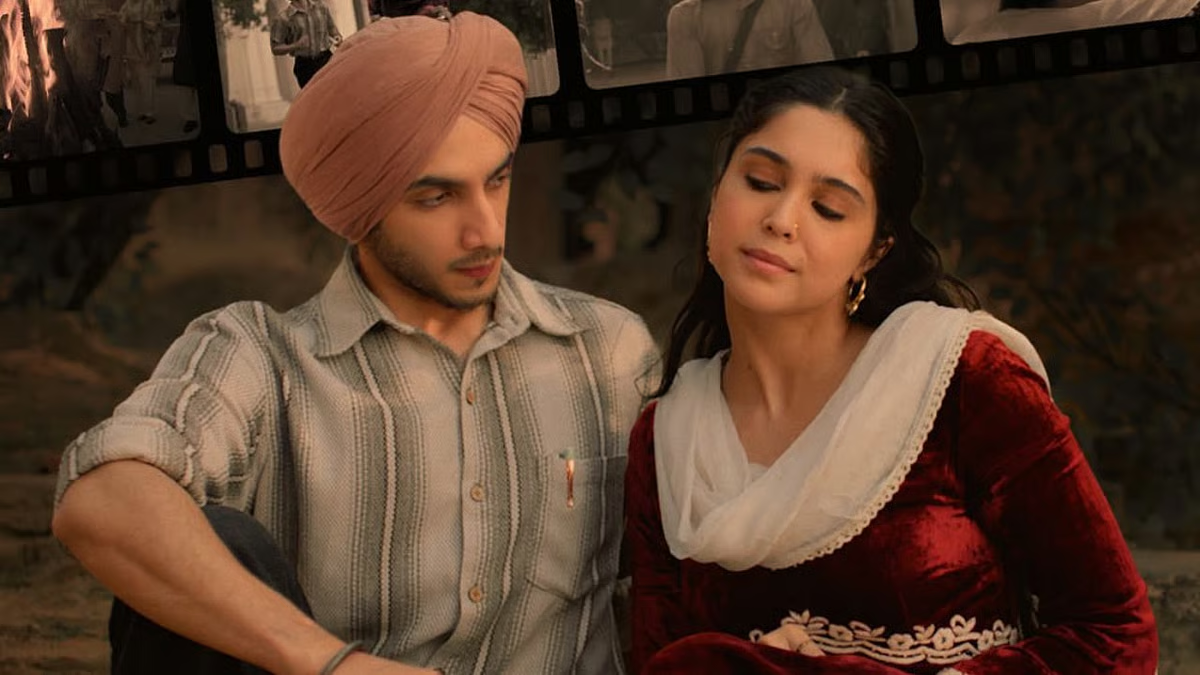
Main Vaapas Aaunga Review: A Poetic, Emotional Drama About Love, Memory, and Partition

Cocktail 2 Review: A Stylish, Familiar Romance That Plays It Safe