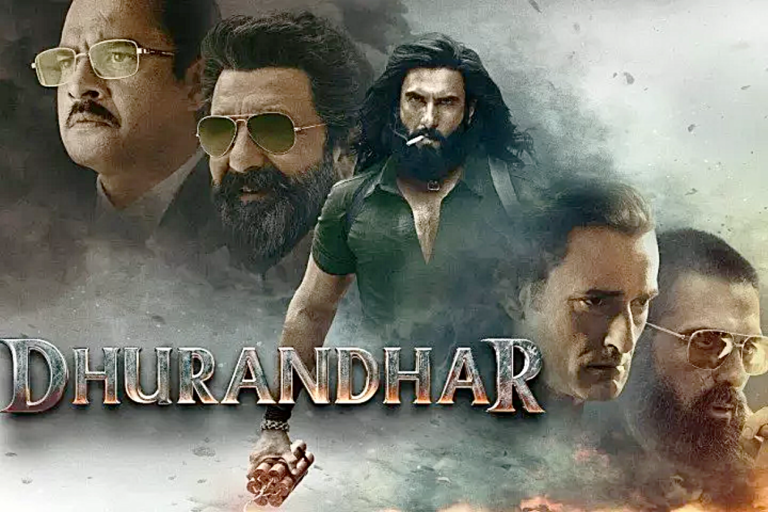
Dhurandhar: The Revenge Review – A Grand, Entertaining Sequel That Delivers on Its Promise

Few sequels manage to justify their existence. Many simply attempt to recreate the magic of the original film while increasing the scale of the action and drama. Dhurandhar: The Revenge succeeds because it understands that audiences are not merely looking for bigger spectacles—they are looking for meaningful progression. The film expands the world established in its predecessor, deepens its central characters, and raises the emotional and political stakes in ways that feel organic rather than forced.
While not without flaws, Dhurandhar: The Revenge is ultimately a highly satisfying continuation of the franchise. It combines intense drama, strong performances, memorable action sequences, and emotional storytelling into a package that is both entertaining and thought-provoking. The film’s only major misstep lies in its treatment of the demonetisation subplot, which feels simplistic compared to the nuance displayed elsewhere in the narrative.
From the opening sequence, the film establishes a darker and more urgent tone than its predecessor. The events of the first film have left lasting consequences, and the characters are forced to navigate a world that is increasingly unstable and unpredictable. Rather than resetting the narrative, the screenplay builds directly upon what came before, rewarding audiences who invested in the original story.
One of the film’s greatest strengths is its confidence. Unlike many commercial entertainers that constantly explain themselves, Dhurandhar: The Revenge trusts viewers to keep up with its political intrigue, shifting alliances, and layered character motivations. This confidence gives the film a sense of maturity and allows the story to unfold naturally.
The screenplay does an excellent job of balancing multiple narrative threads. There are personal vendettas, geopolitical conflicts, intelligence operations, and family dynamics all competing for attention. Yet, for the most part, the film maintains clarity. Every major subplot contributes to the larger narrative, ensuring that the story feels interconnected rather than fragmented.
The performances are another major highlight. Ranveer Singh once again proves why he remains one of the most versatile actors of his generation. His portrayal of a man driven by loyalty, ambition, and revenge is compelling throughout. What makes his performance particularly effective is its restraint. Rather than relying solely on intensity, Singh brings emotional vulnerability to the role, making the character feel human despite his larger-than-life circumstances.
The supporting cast also deserves significant praise. Akshaye Khanna delivers another memorable performance, bringing intelligence and gravitas to every scene. Sanjay Dutt commands attention whenever he appears, while R. Madhavan provides a calm yet powerful presence that balances the film’s more explosive elements. The ensemble works exceptionally well together, creating a believable world populated by complex individuals rather than stock characters.
The film’s emotional core is surprisingly strong. While Dhurandhar: The Revenge is marketed primarily as an action thriller, its most effective moments often involve relationships rather than conflict. Themes of loyalty, betrayal, sacrifice, and redemption run throughout the story. Several scenes achieve genuine emotional impact because the audience understands what is at stake for the characters involved.
Technically, the film is impressive across the board. The cinematography captures both the scale and intimacy of the story with equal effectiveness. Large action sequences are visually spectacular without becoming confusing, while quieter moments are framed with care and precision. The production design deserves particular recognition for creating environments that feel authentic and lived-in.
The action sequences are among the best aspects of the film. Rather than relying solely on computer-generated spectacle, many of the action scenes feel grounded and consequential. Every confrontation carries emotional weight because the audience understands the motivations behind it. The choreography is sharp, the editing is crisp, and the tension remains high throughout.
The background score also plays a significant role in the film’s success. It enhances the drama without overwhelming it and helps maintain momentum during key sequences. Combined with strong sound design, it creates an immersive cinematic experience that rewards theatrical viewing.
Perhaps the film’s most impressive achievement is the way it expands the franchise’s universe. Sequels often struggle because they either remain too dependent on the original or attempt to introduce too many new ideas at once. Dhurandhar: The Revenge finds a balance between familiarity and innovation. It introduces new characters, new conflicts, and new thematic concerns while remaining rooted in the foundations established by the first film.
The pacing is largely effective as well. Despite a lengthy runtime, the film rarely feels stagnant. The narrative continually evolves, ensuring that audiences remain engaged. There are occasional stretches where exposition slows the momentum, but these moments are generally brief and serve a purpose within the larger story.
However, the film is not without shortcomings. The most significant issue is its handling of demonetisation. Throughout much of the film, the screenplay demonstrates a willingness to engage with complex political and economic realities. Unfortunately, this sophistication largely disappears when the story turns its attention to demonetisation.
The issue is not that the film addresses the subject. In fact, incorporating major economic events into a political thriller could have added an additional layer of realism and relevance. The problem is that the treatment feels overly simplistic. The screenplay reduces a complicated policy decision and its far-reaching consequences into a narrative device that supports the film’s broader themes without adequately exploring its complexities.
As a result, the demonetisation arc feels disconnected from the nuance present elsewhere in the story. Characters who are otherwise written with depth and ambiguity suddenly become vehicles for exposition. The narrative adopts a more one-dimensional perspective than audiences have come to expect from the franchise. While this subplot does not derail the film, it stands out precisely because the rest of the screenplay is considerably more sophisticated.
Fortunately, the weakness is limited to a relatively small portion of the overall narrative. The film quickly regains its footing and returns to the character-driven storytelling that defines its strongest moments.
By the time the final act arrives, Dhurandhar: The Revenge has built substantial momentum. The climax is emotionally satisfying, visually impressive, and dramatically engaging. More importantly, it feels earned. The film invests considerable time in developing its characters and conflicts, allowing the resolution to resonate on multiple levels.
Ultimately, Dhurandhar: The Revenge succeeds because it understands the importance of storytelling. While the action, spectacle, and scale are undeniably impressive, they never completely overshadow the human drama at the center of the narrative. The film respects its audience, takes creative risks, and largely delivers on the promise established by its predecessor.
Despite its flawed treatment of demonetisation, Dhurandhar: The Revenge remains an ambitious, entertaining, and emotionally engaging sequel. It expands the franchise in meaningful ways, showcases excellent performances, and delivers several genuinely memorable moments. For fans of the original film, it is a worthy continuation. For newcomers, it serves as a reminder that mainstream cinema can still combine intelligence with entertainment.

Welcome to the Jungle Review: A Film So Contemptuous of Its Audience It Forgot to Be a Film

Hai Jawani Toh Ishq Hona Hai Review: A Loud, Dated Comedy That Runs Out of Steam
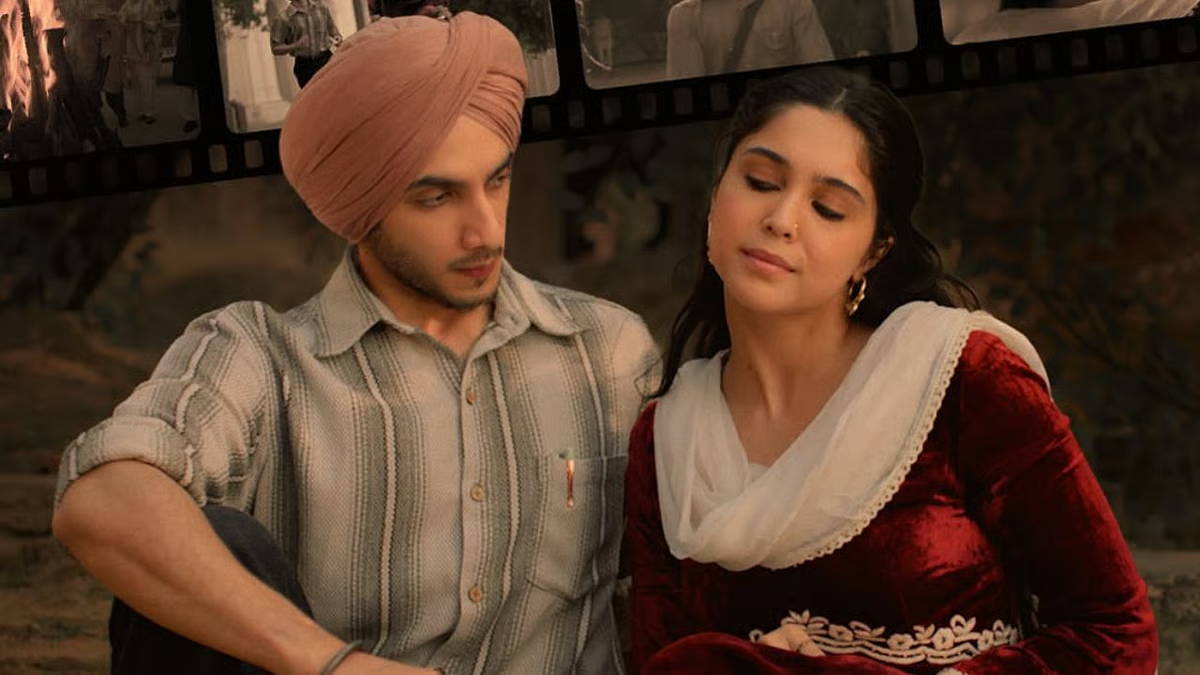
Main Vaapas Aaunga Review: A Poetic, Emotional Drama About Love, Memory, and Partition

Cocktail 2 Review: A Stylish, Familiar Romance That Plays It Safe